
Concept / THINK
The digital prospectus students actually explore.
An interactive brochure for each programme that students tap through on their phone, choosing what they want to know, and that ends on an open day sign-up.
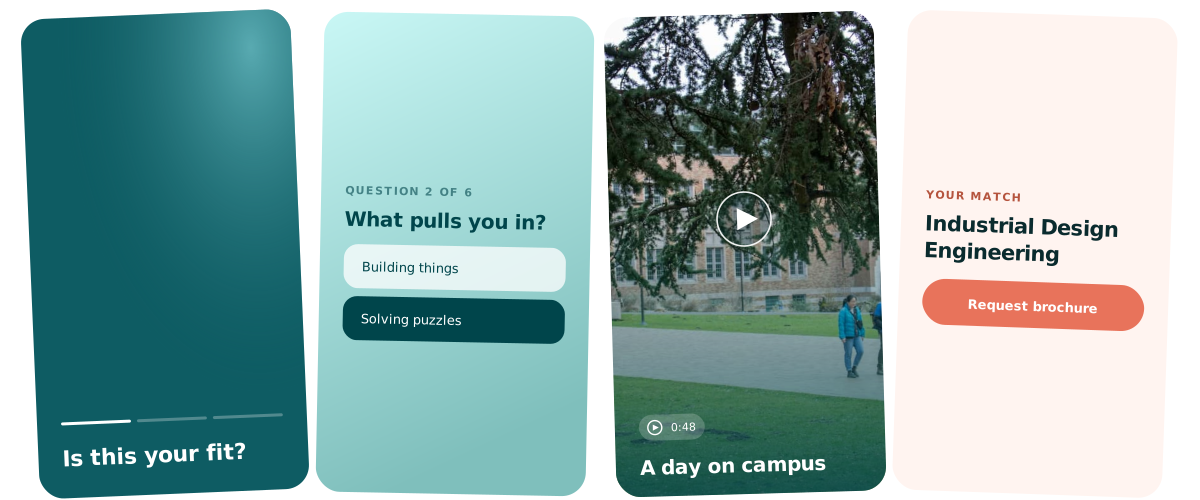
What is an interactive study brochure?
An interactive study brochure, or digital prospectus, is a short, self-directed story about one programme. Students tap through it on their phone and choose what to explore first: what they will learn, the courses, career paths, the teaching style and student life. It ends on one next step, usually an open day sign-up.
It replaces the PDF for students who are already considering a programme. It is not a first impression but the deep dive after one, at home on a programme page or in a follow-up email after programme matching.
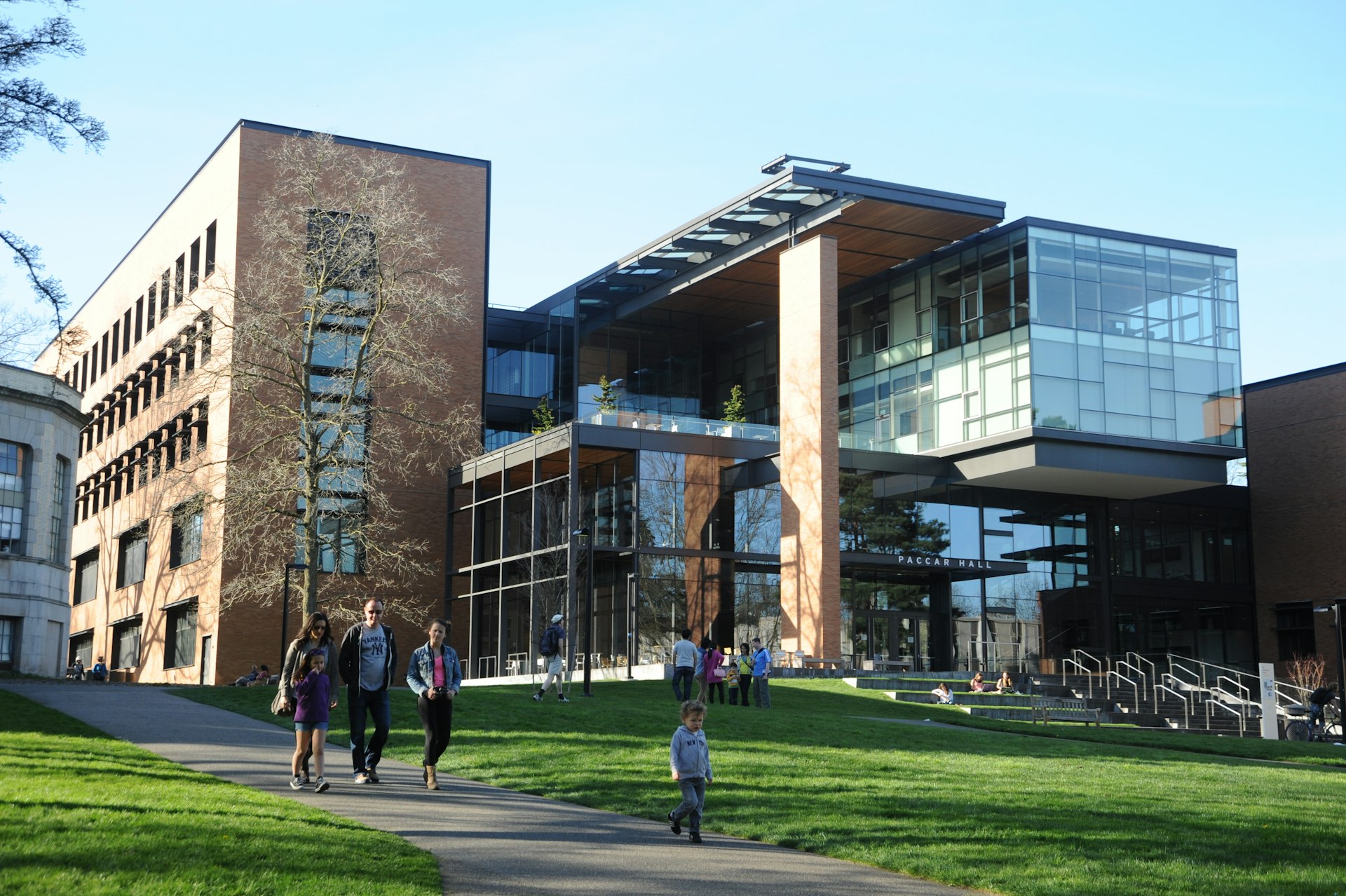
Try it live: TU/e's interactive master's brochure.
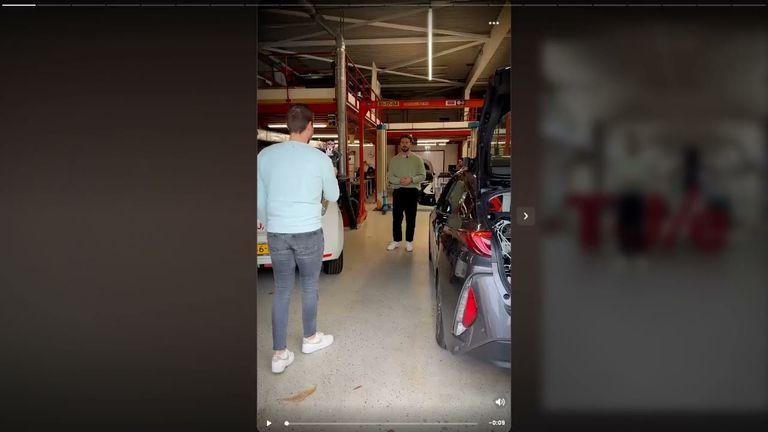
Click to open the story, just as a student would see it.
Why the PDF prospectus falls short.
A PDF was made to be printed. On a phone, students download it, pinch to zoom and scroll sideways, and most never reach the page that matters to them:
- Everyone reads it the same way, or not at all.
- One document for every programme, or a template with the programme name swapped in.
- No sense of what a student cared about or how far they got.
- The open day link sits on the last page, far from the moment the student was convinced.
Simple or rich
One format, from every programme to your flagships.
Give every programme a brochure, and your flagship programmes something special.
A few clear chapters of text, images and key facts. Quick to build and easy to roll out across your whole programme portfolio, so no programme is left with just a PDF.
Video from lecturers and students, deeper branching and interactive elements, for the flagship programmes where the story needs to land.
How it works
From a hub to an open day, in three steps.
Students land on a short programme intro and choose what they want to know first. No fixed path, no forced order, they explore what matters to them.
Each topic, from what you'll learn to careers, courses, student life and teaching style, is a short chapter they can dive into and return from, going as deep as they like.
However they explore, every path leads to a clear next step: signing up for an open day, in context, at the moment they're most convinced.
Students use it. TU/e shows how.
TU/e's interactive master's brochure, on average
Students who go from the TU/e brochure to the next step
A brochure students explore, not a PDF they never open.
- Students branch into what matters to them
- A short version for every programme
- A rich, immersive story for flagships
- Exploration data flows to your CRM
- Everyone reads it the same way, or not at all
- No sense of what a student cares about
- A one-size document for every programme
- No signal to time follow-up
Digital prospectus questions.
An interactive programme brochure: a short story for each programme that students tap through on their phone, choosing the topics they care about. It covers what the PDF covers, in the order the student wants, and ends on a next step such as an open day sign-up.
What students will learn, the courses, career prospects, the teaching style, student life and the admission requirements. You decide the topics. Each one is a short chapter students can dive into and come back from.
Start simple. A few clear chapters per programme is quick to build and easy to roll out across the portfolio. Save the rich, video-led version for the flagship programmes where the story needs to land.
Every chapter is measured, so you see which topics each student opened. That data flows into the CRM your admissions team already runs, including Azorus, Microsoft Dynamics, Slate, TargetX and Salesforce Education, or a custom connection.
Wherever students are seriously exploring a programme: the programme page, the follow-up email after programme matching, your study finder, and campaigns aimed at students who already showed interest.
A first brochure typically takes two to four weeks. You bring the programme content, the topics and any video; we set up the concept and train your team to roll it out to more programmes.
How we build it together.
Start with one programme and the topics students most want: what they will learn, careers, courses and teaching. We generally recommend a simple version for every programme first, then a rich story for flagships.
From there, we shape the concept and framework together and train your team to finish it, so you can adjust, expand and copy it yourself with ease. A first brochure typically takes two to four weeks to build.