
Concept / DO
A pre-arrival guide students actually read.
Pre-boarding stories walk new and international students through housing, finances, intro events and what to prepare, in the weeks between enrolling and day one.
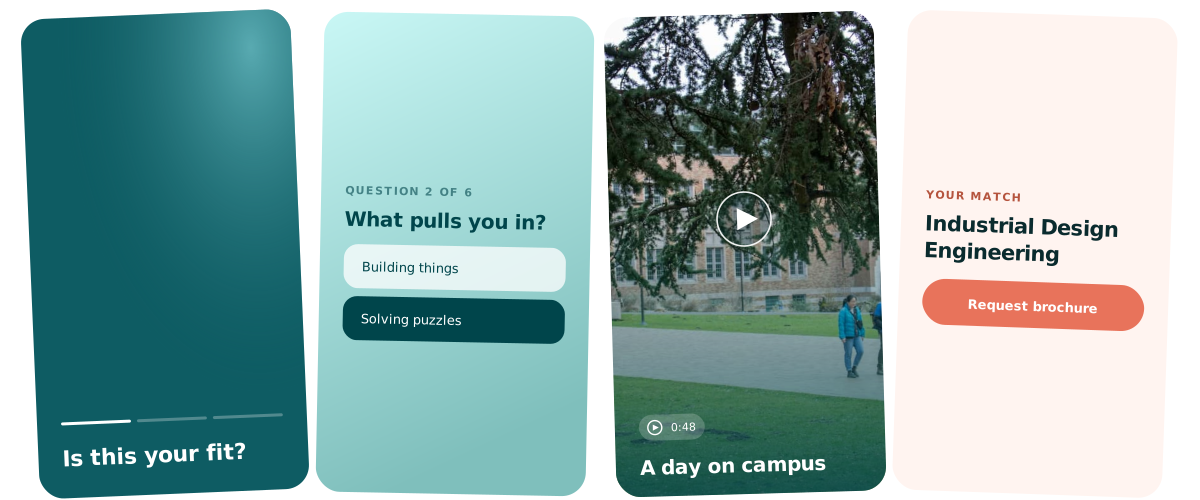
What is pre-boarding?
Pre-boarding is everything a university does between a student enrolling and their first day to get them ready to arrive. A pre-boarding story turns it into a short, browsable guide: students choose the topics they need, from housing and finances to intro events and what to bring, and come away organised instead of anxious.
For international students it doubles as the pre-arrival guide: the practical steps of moving to a new country, in the order they need them. It works as one story, and best as a short series spread over the weeks before term.

Try it live: Radboud University's housing story.
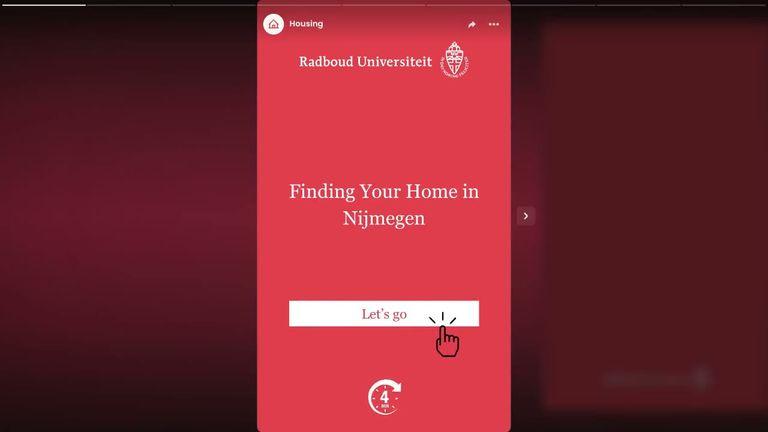
Click to open the story, just as a student would see it.
Why pre-arrival information goes unread.
Between the offer and the first day, new students get a flood of information, often as plain emails, PDFs and portal pages:
- Everything arrives at once, so the urgent steps drown in the rest.
- Key information is scattered across inboxes, portals and websites.
- The same practical questions reach your team by email, one by one.
- International students face the hardest step, finding a room in a tight housing market, with the least local knowledge.
Left unanswered, that uncertainty turns excitement into anxiety, and in some cases into a no-show.
Our recommendation
A short series beats one big pack.
Spread pre-boarding across a few stories, each arriving when it is most useful. You set the number, timing and topics.
Welcome and first steps: a warm start with the essentials to sort out first.
Housing and finances: the big practical items, in good time to arrange them.
Intro events and preparation: the intro programme, final to-dos and what to bring.
Ready to start: students arrive organised, connected and looking forward to it.
How it works
One hub, every topic, at their own pace.
Students begin at a central hub and choose what to prepare, working through their own to-do list rather than following a fixed path.
Each topic, from intro events and housing to finances and how to prepare, is a short chapter they can dive into and return from. You decide which topics to include.
Students explore what is relevant to them and skip the rest, getting the right information at the right moment in the run-up to day one.
Students use it. Radboud, Goin' and TU Delft show how.
Radboud's housing story, part of a pre-boarding series
Goin's Welcome to the Netherlands story, inside the Goin' app
TU Delft's welcome story, right before the start
A confident first day, prepared weeks earlier.
- Everything they need in one place
- The right info at the right moment
- Students choose what to prepare
- Arrivals organised and reassured
- Key info scattered across inboxes
- Everything dumped at once
- Questions left to pile up
- Excitement turning into anxiety
Pre-arrival and pre-boarding questions.
Housing, residence and registration, money and insurance, intro events and the first week, and a way to meet other students. Order it by when students need each step, with housing first because it takes longest, and give each topic its own short chapter.
Pre-boarding happens before day one, between enrolling and arriving: it gets students ready to come. Onboarding starts when they arrive and helps them settle into the first weeks. A welcome story right before the start, like TU Delft's, bridges the two.
Right after a student enrols or accepts the offer. Start with a welcome and the first steps, send housing and finances weeks before term, and intro events and final preparation in the last days.
Put the answer in one story students can work through themselves. Radboud University gives students a realistic picture of the housing market and a step-by-step guide to finding a room: where to look, what to watch out for and how to avoid the common pitfalls.
Yes. Send the series from your email flows or CRM, timed to each student's start date, link it in the student portal, or deliver it inside a community app, as Goin' did with its Welcome to the Netherlands story.
A first pre-boarding story or series typically takes two to four weeks. You bring the topics, the intro programme and key dates; we set up the concept and train your team to keep it up to date.
How we build it together.
Start with the moments that matter: intro events, housing, finances and how to prepare, and whether to run one story or a series. We generally recommend spreading a few short stories across the weeks before term.
From there, we shape the concept and framework together and train your team to finish it, so you can adjust, expand and copy it yourself with ease. A first pre-boarding story typically takes two to four weeks to build.